
Here is the direct link for comments – open until Apr 27, 2026
3/31/26 Detailed article from Yale Climate Connections on the problems of Deep Sea Mining
3/31/26 Seymour Marine Discovery Center Studio: The 12-Kilometer Whisper: Protecting the Soundscapes of Monterey Bay. YouTube video HERE.
Mar 27. Josie Lester a UCSC grad student studying the deep sea mining problem sent these observations
April 2025 Executive Order 14285: Unleashing America’s Offshore Critical Minerals and Resources
- In April 2025, the Trump administration issued Executive Order 14285, “Unleashing America’s Offshore Critical Minerals and Resources,” directing agencies to expedite permitting for deep-sea mining exploration, development, and processing to bolster domestic supply chains against China.
- Processing/refining minerals
Not just the recovery of the minerals has environmental harms associated with it but also the process of refining once the minerals reach the surface. This would enhance the message that SOS and the county is pushing for to not allow onshore facilities.
“Once nodules are recovered from the seafloor, they are washed to remove adhering sediment, resulting in waste. The nodules must then undergo processing to extract Mn, Ni, Cu, and Co from Fe–Mn oxide matrices. There are many challenges in processing, including high processing costs, large reagent consumption, environmental impacts, and waste treatment requirements (Fuerstenau & Han).”
Fuerstenau, D. W., and K. N. Han. “Metallurgy and processing of marine manganese nodules.” Mineral Procesing and Extractive Metallurgy Review 1.1-2 (1983): 1-83.
- Manganese nodules are not really renewable
Due to the fact that the nodules grow at such slow speeds, they are not actually what we think of as renewable energy sources.
“Because these nodules grow at a rate of only a few millimeters per million years, larger nodules, measuring up to 15 centimeters, can be as old as 15 million years (GEOMAR).”
- Pharmaceutical value
“While it may provide access to critical minerals, it risks destroying ecosystems that could yield valuable scientific discoveries. For instance, a deep-sea microbe has already produced a compound called Marizomib, which has shown promise in cancer research and reached early clinical trials (Russo). Other marine-derived compounds, including ecteinascidin, discodermalide, bryostatin, and pseudopterosins, have demonstrated potential for treating cancer, inflammation, and other conditions (NOAA).
The potential loss of marine biodiversity represents a major opportunity cost. The pharmaceutical value of marine biodiversity for anticancer drug discovery alone has been estimated between $563 billion and $5.69 trillion USD, underscoring the long-term economic risks of ecosystem destruction (Russo).”
Russo, Patrizia, et al. “Deep Sea as a Source of Novel-Anticancer Drugs: Update on Discovery and Preclinical/Clinical Evaluation in a Systems Medicine Perspective.” EXCLI Journal, vol. 14, 2015, p. 228.
- War with Iran will increase demand for critical minerals
“Given that the defense sector is so heavily reliant on critical minerals, the current war with Iran will likely have a large impact. In fact, critical minerals are foundational for almost all U.S. weapons systems (The White House). Additionally, 78% of miliatry weapons systems are vulnerable to supply chain disruptions (The Oregon Group). The current reliance of the United States on other nations necessitates a greater focus on locating alternative mineral sources, a demand that will be amplified by the war with Iran. The need for more minerals is also increased because in the first 48 hours of the war, the United States spent $5.6 billion dollars on precision weaponry and $11 billion in the first week. To mitigate the risks posed by this reliance and the amplified demand due to military conflict, the United States will likely urgently prioritize securing stable and diversified sources for these essential critical minerals.”
+++++++++++++++++++++++++++++++++++++++
Mar 5, New York Times article about International Deep Sea Mining Laws
Feb 26, 2026 Santa Cruz Leaders push back on Deep-sea Mining plans
On Feb. 23, 2026, BOEM announced a Notice of Proposed Rulemaking to update rules for offshore hard minerals, clarifying or streamlining provisions related to prospecting, leasing, and operations opening opening a 60-day public comment period that will run until April 27, 2026.
Summary of main opposition points
- 83 countries in the world have signed a moratorium on deep sea mining.
- Deep sea mining is not needed because of newer, safer battery chemistry and recycling.
- Ecological damage would be catastrophic and accelerate climate change.
Here is the direct link for comments – open until Apr 27, 2026
- The world’s first treaty to protect marine life in international waters is now international law.
There are now 83 countries that have ratified it, though the United States has not. Countries that have ratified the treaty have pledged to cooperate and uphold its terms, but options for enforcing such international laws are limited.
Extract from this international report
The science is unequivocal: deep-sea mining would cause irreversible damage to fragile ecosystems that have evolved over millions of years. Recovery, if it occurs at all, would take centuries to millennia. For these reasons, deep-sea mining is incompatible with international commitments to protect ocean health and tackle threats to biodiversity and the climate crisis.
Added 3/11/25 Dan Haifley Wrote: Don’t weaken seabed mining rules
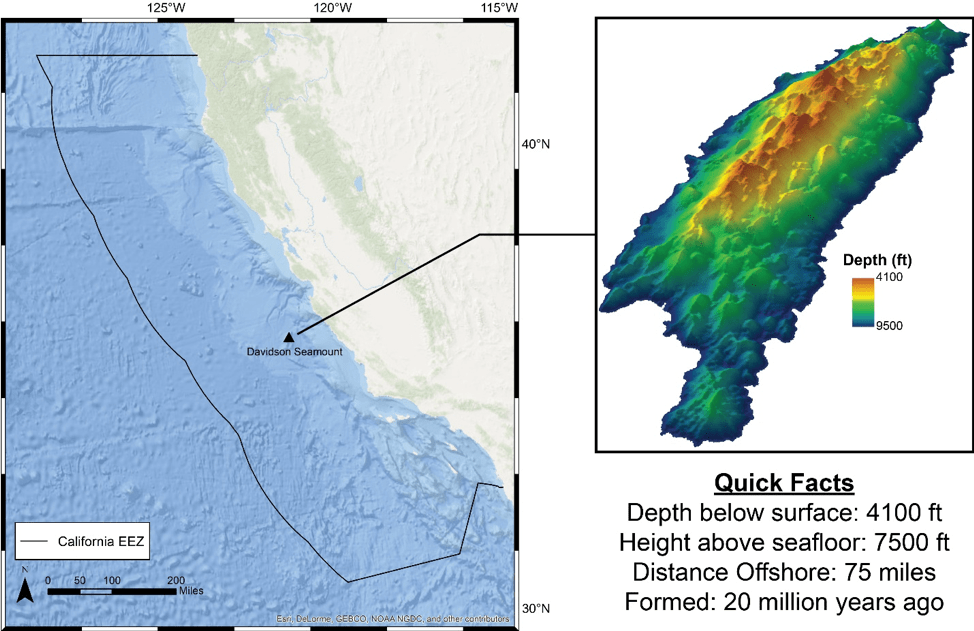
Driven by three presidential executive orders signed in 2025, the Bureau of Ocean Energy Management wants to loosen its rules governing seabed mining, which could commence in a matter of years in federal waters including Gorda Ridge off Northern California and Oregon as well as areas outside the Davidson Seamount management area, which was added to Monterey Bay National Marine Sanctuary in 2008. If you want to take action, please read on.
What seabed mining is
Seabed mining test projects have taken place off Japan and Africa, but full-scale commercial operations have yet to start. The practice would target minerals such as copper, nickel, cobalt, manganese, and rare earths for consumer electronics, health care, defense and energy — even though improved technology, reuse and recycling are extending the useful lives of products. A mining operation would use a remote-controlled vehicle to remove nodules containing several minerals, or dig into the crust of the ocean bottom or a seamount, which is then pumped to a ship on the ocean’s surface through a vertical riser.
The Bureau of Ocean Energy Management is contemplating mining in U.S. waters off Alaska, American Samoa, The Commonwealth of the Northern Mariana Islands, and Virginia. The U.S. West Coast could come soon after. On a separate track the National Oceanic and Atmospheric Administration has been tasked with issuing permits for international waters, despite the fact that a UN treaty governs it.
Its Impacts
There was no commercial mining history for Save Our Shores to draw from, but there is modeling and common sense. To start, removing polymetallic nodules or cutting into crusts would harm structures that have taken millions of years to form. Ancient corals, sponges, sea cucumbers, brittle stars and microscopic microbial communities would be affected. Warm water vents near the Davidson Seamount create the conditions there for the Octopus Garden, which is believed to host between 6,000 and 20,000 individuals.
Sediment plumes would arise from the mining site and travel as far as currents will take them, and wastewater produced after the raw material is processed on board the operation’s ship would be pumped back into the ocean. Onshore, helicopters pads to carry staff to ocean-going vessels, facilities to remove water from raw materials for storage and transport, and harbor space to dock the ships used would all be necessary. Save Our Shores is working with local communities to help them deal with these impacts.
A 23-minute film “Defend The Deep” produced by the Ocean Foundation can be seen at youtube.com/watch?v=iBAfQ0jgLIQ.
Weakening The Rules
The Bureau of Ocean Energy Management is proposing to trim regulations. A requirement that its director decide within 45 days an appeal of a penalty against a mining operator is proposed to be replaced with a 28-day timeframe. The bureau is also proposing to remove the regulation requiring environmental assessments because, according to its posted analysis, it “is potentially misleading, and superfluous. ” However, what’s in the statute should also be reflected in the regulations, which is what agency staff use for guidance.
The bureau also seeks to eliminate a requirement that agencies, tribal governments and nonprofit groups be informed of environmental impacts. Typically, those interested in ocean development projects are not only informed, but also invited to engage. They’re often the ones who respond to environmental disasters such as oil spills, accidents involving toxics, and vessel groundings. The same should apply to seabed mining.
Finally, BOEM has proposed removing requirements that parties who’ve expressed interest in prospecting permits be kept informed because, it says, those applications “have typically been posted to BOEM’s website.” It also proposes to respond to unsolicited requests for leases within 28, as opposed to the current 45, days. The bureau also wants to eliminate the regulation that lists what activities are exempt from environmental review.
Your comment can help build the legal and public case for appropriate oversight, as well as protection of the ocean and the life it supports. You can provide a comment by 8:59 p.m. PST on April 27 by going to regulations.gov/document/BOEM-2025-0120-0001 and clicking “Comment.”
Dan Haifley can be reached at dan.haifley@gmail.com.
BOEM (Bureau of Ocean Energy Management) claims
Offshore critical minerals are hard minerals that are in limited supply and that are essential to U.S. economic and national security. Critical minerals include nickel, cobalt, lithium, manganese, and rare earth elements. Uses for critical minerals include consumer electronics, energy production, healthcare, transportation, and defense.
For about more than 10 years, NMC (Nickel-Manganese-Cobalt) batteries have been produced in large quantities. However, they are prone to thermal runaway, which triggered the massive Moss Landing battery fire in 2025. New regulations ban NMC and require LFP Lithium-Iron-Phosphate batteries which are much safer and also last longer. Details here
Already there are recycling facilities for NMC batteries. So less NMC will be needed in the future and what is needed can be supplied by recycling. Info here
Therefore, we don’t desperately need these minerals!
New research has shown that deep sea mining will disrupt ocean carbon cycling and accelerate global warming. Details in this 13 minute video
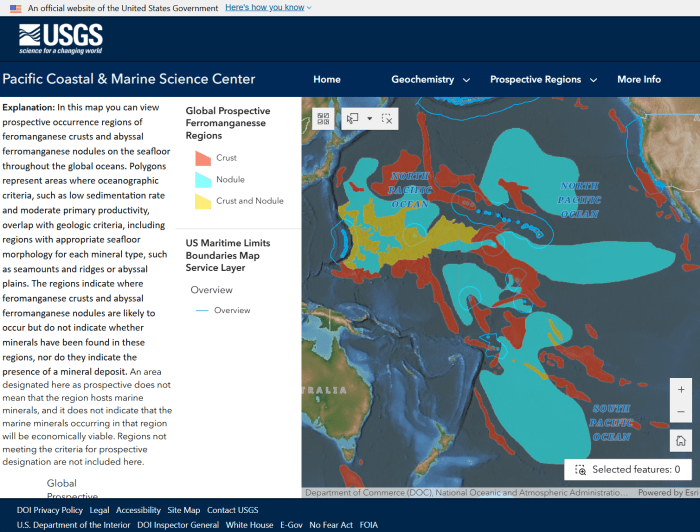
This map shows that areas within our marine sanctuaries are threatened
Threatened areas include the Davidson Seamount
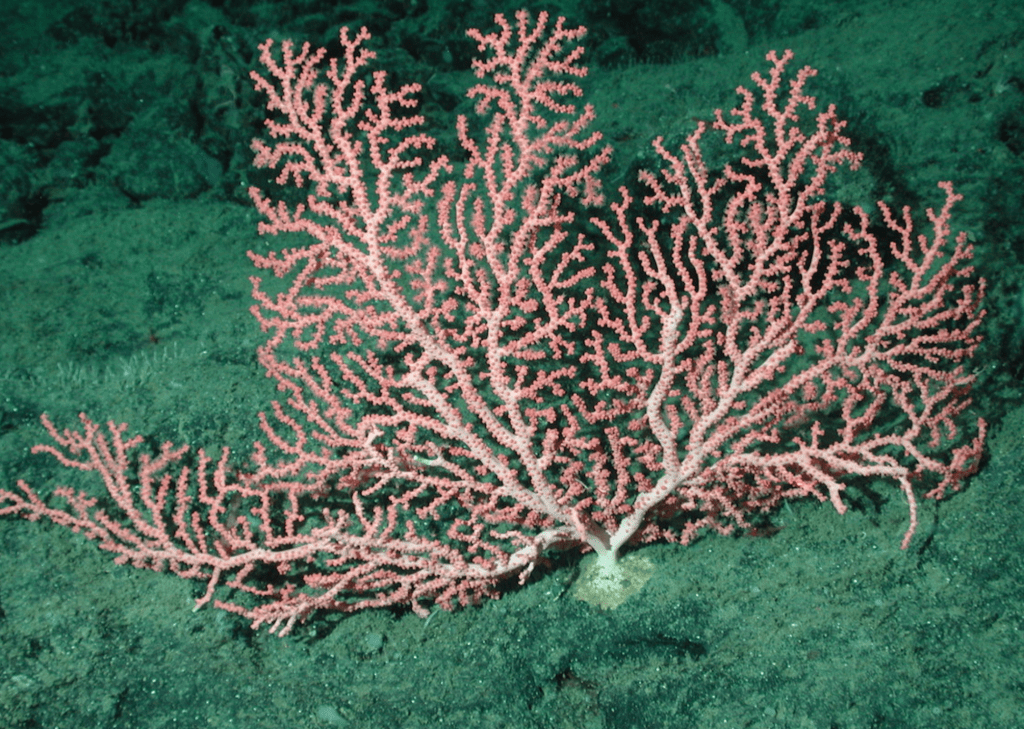
Many wonderful creatures are still being discovered in this area
Deep Sea mining would cause problems through the entire water column and food web.
Links to detailed articles:
New York Times on deep sea mining
Video on recent science discoveries 14min about the dangers of deep sea mining
The Octopus Garden is a recently discovered octopus nursery within our marine sanctuary
Short time lapse video – play at .5 speed – 2mins

5min – Excellent details about the
 Santa Cruz Climate Action Network